
By Derrick Malone August 6, 2026
Running a successful retail business requires much more than processing customer purchases. Every sale affects inventory, financial records, customer data, purchasing decisions, and future business planning. When these functions operate independently, businesses often experience delays, errors, duplicate work, and inconsistent information. Over time, these inefficiencies can affect customer satisfaction, profitability, and overall operational performance.
Modern retailers are increasingly adopting technology that connects different parts of their business into one central platform. Rather than relying on separate systems for payments, inventory tracking, reporting, and customer management, businesses are turning to integrated solutions that allow information to move automatically between departments. This approach reduces manual work while giving business owners greater visibility into daily operations.
Today’s integrated POS systems help retailers manage sales, inventory, payments, customer information, and reporting through a single connected platform. Advanced POS inventory management tools automatically update stock levels with every transaction, while comprehensive payment and inventory software simplifies financial tracking and inventory control. Combined with modern retail operations technology, businesses gain better insight into performance, and smart POS solutions provide the flexibility needed to support future growth.
Understanding Integrated POS Systems
The term POS used to refer to the location at which customers would make their purchases. While this is still the most common use of the technology, times have changed with technological advancements.
An integrated POS system integrates all aspects of the business into one system. This means that inventory management, payment processes, accounting, purchasing, and customer data do not function in isolation from each other but as an interdependent unit.
The instant a transaction is made by the customer, the inventory levels are updated. Sales information is recorded automatically. Accounting processes kick in, and the process of making accounting reports begins. Purchasing and customer information is collected and can be analyzed in the future.
Integration saves time on administrative tasks and ensures that every department in the business uses up-to-date and accurate information.
Why Integration Matters in Retail
A great deal of data is created daily by retail enterprises. Any transaction, return, transfer or reordering of goods impacts many aspects of an enterprise’s work.
Without integrated technology, employees may have to enter the same data into several applications manually. Such repetition adds to the workload and causes possibilities of errors.
For instance, after conducting transactions, workers may need to make changes to the inventory, enter data manually into the accounting system and conduct payment reconciliation via another application. All of these steps take a lot of time.
The use of integrated technology greatly decreases this repetition, since data is transferred automatically between all linked applications. It helps create consistency and efficiency.
With growing competition, many retailers rely on retail operations technology that makes their work less manual and more accurate.
Real-Time Inventory Updates Improve Accuracy
Accurate inventory is one of the major elements of effective retail management. People get frustrated when items seem to be available but in fact cannot be bought due to outdated inventory information.
With modern POS systems of inventory management, stock amounts get automatically updated every time products are sold, returned, exchanged or moved around among stores. Manual updating of inventory is not required for each sale anymore.
Thus, businesses have a precise number of units that are available right now. Managers can see the inventory status from a distance and make more accurate purchase decisions thanks to up-to-date data.
Furthermore, accurate inventory information increases customers’ confidence since employees can verify the product availability immediately without checking storerooms and manually counting the inventory during peak periods.
Preventing Overstocking and Stock Shortages
Maintaining appropriate inventory levels requires careful planning. Ordering too much inventory ties up valuable capital and increases storage costs. Ordering too little creates stock shortages that result in missed sales opportunities.
Integrated inventory systems provide detailed sales information that helps retailers understand purchasing trends and seasonal demand. Managers can identify products that sell quickly while recognising slower-moving inventory before it becomes a financial burden.
Automated alerts can notify businesses when inventory reaches predetermined reorder levels, reducing the likelihood of unexpected shortages.
Using reliable payment and inventory software, retailers gain clearer insight into purchasing requirements while maintaining healthier inventory levels throughout the year.
Faster Checkout Improves Customer Satisfaction
Customers expect efficiency in checkouts whether they are shopping at supermarkets, boutiques, electronic shops, pharmacies, or specialty shops.
The integration of the system makes the process of payment quick since pricing, discounts, taxes, promotions, and payments are done simultaneously through the system. The employees do not have to use several systems or go through verification procedures in order to conduct sales.
The process takes less time and thus cuts down on waiting times during peak times and serves more customers without overworking the employees.
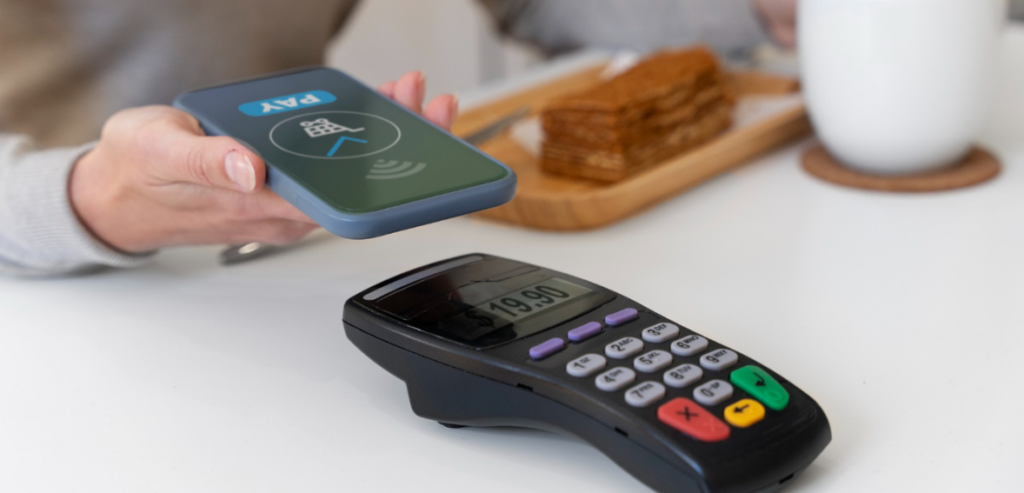
Most intelligent POS systems can handle several forms of payment such as contactless cards, digital wallets, mobile money, and gift cards.
Simplifying Payment Processing
Payment processing is not only about collecting money from customers but also about reconciling transactions, tracking the methods of payments, creating financial reports, and managing accounting records.
The integrated system of payment and inventory management will automatically input payment data along with sales data, thereby minimizing the need for reconciliation.
It will be easy to track payment activity and trends in transactions as well as the methods used by managers through reporting dashboards.
Better Financial Visibility
Understanding business performance requires access to accurate financial information. Traditional systems often require managers to gather reports from multiple sources before obtaining a complete picture of operations.
Integrated POS systems generate financial reports automatically using real-time transaction data. Sales totals, payment methods, inventory values, and revenue trends remain available whenever management needs them.
Business owners can quickly identify high-performing product categories, evaluate promotional campaigns, and monitor daily sales performance without waiting for manual reporting.
This improved visibility supports better decision-making while helping businesses respond more quickly to changing market conditions.
Managing Multiple Store Locations
Multiple location retail enterprises may have more problems with operation than those that only have one store. Transfer of inventory, pricing, sales tracking, and payment reconciliation become more difficult when each location runs separately.
With today’s POS systems, information is consolidated from all locations into one system that managers can use to control their operations.
Inventory can be easily shifted between locations, keeping track of the records. Prices can be changed in all locations at once. Sales reports will reflect information about each specific location and about the whole enterprise.
Improving Employee Productivity
Employee productivity is increased when technology streamlines employees’ work instead of adding to it. Through integration, fewer redundant activities are necessary because things like tracking of inventory, logging of payments, generation of reports, and tracking of customer information is done automatically. Employees are spending more time assisting customers because they are not entering information into systems manually.
Integration also makes less training necessary because employees have to master only one system instead of multiple systems. Firms that implement technology for advanced retail operations usually see an increase in productivity as a result.
Better Purchasing Decisions
Purchasing decisions directly affect profitability, inventory costs, and customer satisfaction. Ordering products based solely on assumptions increases the likelihood of excess inventory or stock shortages.
Integrated systems analyse historical sales patterns, seasonal demand, and current inventory levels to provide valuable purchasing insights.
Managers can identify which products consistently perform well, which items experience seasonal fluctuations, and which inventory moves slowly.
Reliable POS inventory management supports more informed purchasing decisions while reducing unnecessary inventory investment.
Supporting Customer Loyalty
Customer relationships play an important role in long-term retail success. Integrated POS platforms often include customer profiles that record purchase histories, loyalty programme participation, and shopping preferences.
Employees can personalise customer interactions by reviewing previous purchases or applying loyalty rewards automatically during checkout.
Businesses also gain opportunities to create targeted marketing campaigns based on customer purchasing behaviour rather than relying on general promotions.
Many smart POS solutions integrate customer relationship management features directly into the checkout process, helping retailers strengthen customer engagement while encouraging repeat business.
Reducing Administrative Work
Administrative responsibilities consume considerable time in many retail businesses. Inventory counting, payment reconciliation, report preparation, purchasing records, and customer information management all require ongoing attention.
Integrated technology automates many of these responsibilities, allowing information entered once to update multiple business functions simultaneously.
Managers spend less time correcting discrepancies, generating reports, or transferring information between systems manually.
This operational efficiency allows leadership teams to focus more attention on strategic planning, employee development, merchandising, and customer service rather than repetitive paperwork.
Improving Business Reporting
Modern businesses rely heavily on data when making operational decisions. Integrated POS systems collect valuable information continuously throughout daily operations.
Sales reports reveal top-performing products, peak shopping hours, seasonal trends, customer purchasing patterns, and inventory movement. Payment reports provide additional insight into customer payment preferences and financial performance.
Because all information comes from one connected platform, reporting becomes more accurate and easier to understand.
Comprehensive reporting capabilities remain one of the strongest advantages offered by modern payment and inventory software, allowing retailers to make evidence-based decisions with greater confidence.
Supporting Omnichannel Retail
Today’s consumers increasingly shop across multiple channels. They may browse products online before visiting stores, purchase online for local collection, or return products purchased through another sales channel.
Integrated POS systems help connect these experiences by maintaining consistent inventory and payment information across online and physical retail environments.
When products sell online, inventory updates immediately across all channels. Customers receive more accurate availability information while businesses reduce overselling risks.
Integrated retail operations technology helps retailers create smoother customer experiences regardless of how purchases are completed.
Enhancing Inventory Audits
Inventory audits remain essential for maintaining accurate stock records and identifying discrepancies.
Integrated inventory systems simplify auditing by maintaining continuous transaction histories for every product movement. Managers can review sales, returns, transfers, adjustments, and purchasing records within one platform.
Cycle counts become easier because current inventory information is readily available before physical verification begins.
Businesses using advanced POS inventory management generally spend less time resolving inventory discrepancies because transaction records remain organised and accessible.
Better Security and Data Protection
Retail businesses manage valuable financial information, customer data, and inventory records that require strong security.
Modern integrated POS platforms typically include user permissions, encrypted payment processing, secure cloud storage, and automated software updates that improve overall system security.
Managers can assign different access levels to employees while maintaining detailed transaction histories that support accountability.
Although no technology completely eliminates risk, professionally managed smart POS solutions generally provide stronger security than disconnected systems relying heavily on manual processes.
Supporting Business Growth
Business growth introduces new operational complexity. Additional employees, expanded inventory, multiple locations, and increasing transaction volumes require systems capable of handling greater workloads.
Integrated POS platforms provide scalability that supports expansion without requiring complete technology replacement. New registers, users, locations, and product categories can often be added within existing systems.
Businesses continue using familiar workflows while gradually expanding operational capabilities to match growth.
Many retailers view integrated POS systems as long-term investments because they provide flexibility that supports changing business requirements over time.
Preparing for Future Retail Technology
Retail technology continues evolving rapidly through AI, predictive analytics, automation, mobile commerce, and personalised customer experiences.
Integrated systems provide a strong foundation for adopting these future innovations because connected data already exists within one central platform.
Businesses using integrated technology often implement new capabilities more smoothly than organisations operating multiple disconnected systems.
As customer expectations continue changing, retailers equipped with flexible technology remain better positioned to adapt without disrupting daily operations.
Why Integration Is Becoming the Industry Standard
Retailers today face increasing pressure to operate efficiently while delivering exceptional customer experiences. Manual processes, disconnected systems, and fragmented information create unnecessary complexity that limits business performance.
Integrated technology addresses these challenges by connecting inventory, payments, reporting, customer management, and purchasing within one platform. Employees work more efficiently, managers make better decisions, and customers benefit from faster, more reliable service.
Whether operating a single independent store or a growing retail chain, businesses increasingly recognise that connected systems support stronger operational performance than isolated software applications.
This widespread adoption reflects a broader industry shift toward technology that simplifies operations while supporting long-term business growth.
Conclusion
Retail success depends on accurate information, efficient operations, and the ability to respond quickly to changing customer needs. Managing inventory and payments through separate systems often creates unnecessary administrative work, increases the likelihood of errors, and limits business visibility.
Modern integrated POS systems solve these challenges by connecting every stage of the retail process into one coordinated platform. Advanced POS inventory management improves stock accuracy, reliable payment and inventory software simplifies financial tracking, comprehensive retail operations technology supports better decision-making, and flexible smart POS solutions prepare businesses for future growth.
As retail environments continue becoming more competitive, integrated systems offer businesses a practical way to improve efficiency, strengthen customer experiences, reduce operational complexity, and build a stronger foundation for long-term success. Retailers that invest in connected technology today are better equipped to manage inventory accurately, process payments seamlessly, and adapt confidently to the changing demands of modern commerce.